Happy Returns | Trust Center | Trust Center
Happy Returns, a UPS Company
At Happy Returns, security is our top priority. We integrate it into every aspect of our operations to ensure the reliability of our tools and services. The resources available on this page, such as certifications and security reports, are more than just due diligence, they are the foundation of our commitment to earning and maintaining your trust. We take pride in demonstrating that your data is secure, private, and managed responsibly, enabling us to focus on delivering high-quality, secure innovations. Thank you for choosing Happy Returns as your trusted partner. Welcome aboard!
See Certifications

Resources

SOC2 Type2

2025-SOC2 Available Now

Pentest Reports

2025-Available Now

CAIQ Assessment Questionaire

CONSESUS ASSESSMENTS INITIATIVE QUESTIONAIRE v4.03

SIG Lite 2025

Shared Assessment Questionnaire v2025

Happy Returns NDA

This Non-Disclosure Agreement (NDA) has been mutually agreed upon during the document request process. Download your copy for reference, ensuring all parties uphold their confidentiality commitments. This document outlines the agreed terms for protecting sensitive information, reinforcing trust and compliance. Secure your records—download now!

Network Documentation

Happy Returns Network Diagram

Security and Privacy Policies

Available October 2025

Secure Software Development

Happy Returns Secure Software Development

Business Resiliency Documentation

Disaster Recovery Test Results 2025

FAQs

Subprocessors

AWS

"As a Subprocessor, AWS provides secure and scalable infrastructure for hosting and managing personal data, enabling organizations to meet operational needs while maintaining compliance with applicable privacy and data protection laws."

Google Cloud

"Google Cloud, through its services Firebase and Geolocation, acts as a Subprocessor to facilitate backend operations, app analytics, and location-based services. It processes data solely as instructed by our organization, maintaining stringent security and compliance standards to protect user privacy."
Datadog

Datadog serves as a subprocessor for monitoring and observability within our organization's infrastructure. As a subprocessor, Datadog collects, processes, and analyzes telemetry data from your systems, applications, and services to ensure performance, reliability, and scalability.

Salesforce

Salesforce is a cloud-based customer relationship management (CRM) platform that supports various business functions, including sales, marketing, customer service, and analytics. As a subprocessor, Salesforce processes data on behalf of Happy Returns, primarily to facilitate and optimize customer relationship management, marketing campaigns, and operational workflows.

Monitoring

Continuously monitored by Secureframe
View all

Compliance

SOC 2

2025 SOC 2 Type 2 Certified
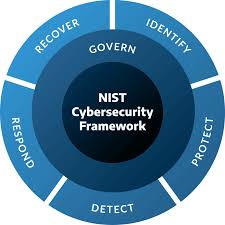
NIST Cybersecurity

Framework Compliance and Automated Assessment

GDPR

Framework Compliance and Automated Assessment
CCPA

Framework Compliance and Automated Assessment

Monitoring

Change Management

Secure Development Policy
A Secure Development Policy defines the requirements for secure software and system development and maintenance.
Change Management Policy
A Change Management Policy governs the documenting, tracking, testing, and approving of system, network, security, and infrastructure changes.
Production Data Use is Restricted
Production data is not used in the development and testing environments, unless required for debugging customer issues.
Configuration and Asset Management Policy
A Configuration and Asset Management Policy governs configurations for new sensitive systems
Segregation of Environments
Development, staging, and production environments are segregated.
Baseline Configurations
Baseline configurations and codebases for production infrastructure, systems, and applications are securely managed.

Availability

Testing the Business Continuity and Disaster Recovery Plan
The Business Continuity and Disaster Recovery Plan is periodically tested via tabletop exercises or equivalents. When necessary, Management makes changes to the Business Continuity and Disaster Recovery Plan based on the test results.
Uptime and Availability Monitoring
System tools monitors for uptime and availability based on predetermined criteria.
Business Continuity and Disaster Recovery Policy
Business Continuity and Disaster Recovery Policy governs required processes for restoring the service or supporting infrastructure after suffering a disaster or disruption.
High Availability Configuration
The system is configured for high availability to support continuous availability, when applicable.
Backup Restoration Testing
Backed-up data is restored to a non-production environment at least annually to validate the integrity of backups.

Organizational Management

Organizational Chart
Management maintains a formal organizational chart to clearly identify positions of authority and the lines of communication, and publishes the organizational chart to internal personnel.
Disciplinary Action
Personnel who violate information security policies are subject to disciplinary action and such disciplinary action is clearly documented in one or more policies.
Internal Control Policy
An Internal Control Policy identifies how a system of controls should be maintained to safeguard assets, promote operational efficiency, and encourage adherence to prescribed managerial policies.
Cybersecurity Insurance
Cybersecurity insurance has been procured to help minimize the financial impact of cybersecurity loss events.
Performance Review Policy
A Performance Review Policy provides personnel context and transparency into their performance and career development processes.
Security Awareness Training
Internal personnel complete annual training programs for information security to help them understand their obligations and responsibilities related to security.
Roles and Responsibilities
Information security roles and responsibilities are outlined for personnel responsible for the security, availability, and confidentiality of the system.
Performance Reviews
Internal personnel are evaluated via a formal performance review at least annually
New Hire Screening
Hiring managers screen new hires or internal transfers to assess their qualifications, experience, and competency to fulfill their responsibilities. New hires sign confidentiality agreements or equivalents upon hire.
Background Checks
Background checks or their equivalent are performed before or promptly after a new hires start date, as permitted by local laws.
Information Security Policy
An Information Security Policy establishes the security requirements for maintaining the security, confidentiality, integrity, and availability of applications, systems, infrastructure, and data.
Information Security Program Review
Management is responsible for the design, implementation, and management of the organization’s security policies and procedures. The policies and procedures are reviewed by management at least annually.
Advisor Meetings on Security
Senior management and/or board of directors meets at least annually to review business goals, company initiatives, resource needs, risk management activities, and other internal/external matters. The information security team meets at least annually to discuss security risks, roles & responsibilities, controls, changes, audit results and/or other matters as necessary.
Internal Control Monitoring
A continuous monitoring solution monitors internal controls used in the achievement of service commitments and system requirements.
Acceptable Use Policy
An Acceptable Use Policy defines standards for appropriate and secure use of company hardware and electronic systems including storage media, communication tools and internet access.
Code of Conduct
A Code of Conduct outlines ethical expectations, behavior standards, and ramifications of noncompliance.

Confidentiality

Data Retention and Disposal Policy
A Data Retention and Disposal Policy specifies how customer data is to be retained and disposed of based on compliance requirements and contractual obligations.
Data Classification Policy
A Data Classification Policy details the security and handling protocols for sensitive data.
Disposal of Customer Data
Upon customer request, Company requires that data that is no longer needed from databases and other file stores is removed in accordance with agreed-upon customer requirements.
Retention of Customer Data
Procedures are in place to retain customer data based on agreed-upon customer requirements or in line with information security policies.
Access to Customer Data is Restricted
Access to, erasure of, or destruction of customer data is restricted to personnel that need access based on the principle of least privilege.

Vulnerability Management

Vulnerability and Patch Management Policy
A Vulnerability Management and Patch Management Policy outlines the processes to efficiently respond to identified vulnerabilities.
Third-Party Penetration Test
A 3rd party is engaged to conduct a network and application penetration test of the production environment at least annually. Critical and high-risk findings are tracked through resolution.

Incident Response

Tracking a Security Incident
Identified incidents are documented, tracked, and analyzed according to the Incident Response Plan.
Incident Response Plan Testing
The Incident Response Plan is periodically tested via tabletop exercises or equivalents. When necessary, Management makes changes to the Incident Response Plan based on the test results.
Incident Response Plan
An Incident Response Plan outlines the process of identifying, prioritizing, communicating, assigning and tracking confirmed incidents through to resolution.

Risk Assessment

Risk Register
A risk register is maintained, which records the risk mitigation strategies for identified risks, and the development or modification of controls consistent with the risk mitigation strategy.
Risk Assessment and Treatment Policy
A Risk Assessment and Treatment Policy governs the process for conducting risk assessments to account for threats, vulnerabilities, likelihood, and impact with respect to assets, team members, customers, vendors, suppliers, and partners. Risk tolerance and strategies are also defined in the policy.
Risk Assessment
Formal risk assessments are performed, which includes the identification of relevant internal and external threats related to security, availability, confidentiality, and fraud, and an analysis of risks associated with those threats.
Vendor Due Diligence Review
Vendor SOC 2 reports (or equivalent) are collected and reviewed on at least an annual basis.
Vendor Risk Management Policy
A Vendor Risk Management Policy defines a framework for the onboarding and management of the vendor relationship lifecycle.

Network Security

Automated Alerting for Security Events
Alerting software is used to notify impacted teams of potential security events.
Network Traffic Monitoring
Security tools are implemented to provide monitoring of network traffic to the production environment.
Logging and Monitoring for Threats
Logging and monitoring software is used to collect data from infrastructure to detect potential security threats, unusual system activity, and monitor system performance, as applicable.
Endpoint Security
Company endpoints are managed and configured with a strong password policy, anti-virus, and hard drive encryption
Network Security Policy
A Network Security Policy identifies the requirements for protecting information and systems within and across networks.
Restricted Port Configurations
Configurations ensure available networking ports, protocols, services, and environments are restricted as necessary, including firewalls.

Access Security

Unique Access IDs
Personnel are assigned unique IDs to access sensitive systems, networks, and information
Access Control and Termination Policy
An Access Control and Termination Policy governs authentication and access to applicable systems, data, and networks.
Asset Inventory
A list of system assets, components, and respective owners are maintained and reviewed at least annually
User Access Reviews
System owners conduct scheduled user access reviews of production servers, databases, and applications to validate internal user access is commensurate with job responsibilities.
Encryption and Key Management Policy
An Encryption and Key Management Policy supports the secure encryption and decryption of app secrets, and governs the use of cryptographic controls.
Encryption-at-Rest
Service data is encrypted-at-rest.
Administrative Access is Restricted
Administrative access to production infrastructure is restricted based on the principle of least privilege.
Removal of Access
Upon termination or when internal personnel no longer require access, system access is removed, as applicable.
Least Privilege in Use
Users are provisioned access to systems based on principle of least privilege.
Encryption-in-Transit
Service data transmitted over the internet is encrypted-in-transit.
Complex Passwords
Personnel are required to use strong, complex passwords and a second form of authentication to access sensitive systems, networks, and information
Access to Product is Restricted
Non-console access to production infrastructure is restricted to users with a unique SSH key or access key

Physical Security

Physical Access Reviews
Processes are in place to periodically review physical access to ensure consistency with job responsibilities.
Physical Security Policy
A Physical Security Policy that details physical security requirements for the company facilities is in place.
Visitor Control
Production facilities require all visitors to formally sign-in, unless preauthorization for the visitor exists.
Physical Security Safeguards
Physical protections are in place to safeguard facilities, infrastructure, systems, and data from external and internal threats

Communications

Privacy Policy
A Privacy Policy to both external users and internal personnel. This policy details the company's privacy commitments.
Communication of Critical Information
Critical information is communicated to external parties, as applicable.
Communication of Security Commitments
Security commitments and expectations are communicated to both internal personnel and external users via the company's website.
Description of Services
Descriptions of the company's services and systems are available to both internal personnel and external users.
Confidential Reporting Channel
A confidential reporting channel is made available to internal personnel and external parties to report security and other identified concerns.
Terms of Service
Terms of Service or the equivalent are published or shared to external users.